An algorithm that works on a single greenhouse fails when monsoon, heat-wave or salinity is added. AgriTech TRL 5–6 must prove the technology in the actual agro-climatic zone, not a generic 'relevant environment'.
National Technology Readiness Assessment Framework · AgriTech extension
Agriculture cannot be benched. Readiness has to survive a season.
NTRAF gives the season a grammar — nine demonstrated levels of maturity, anchored in evidence that survives soil, climate and smallholder economics.
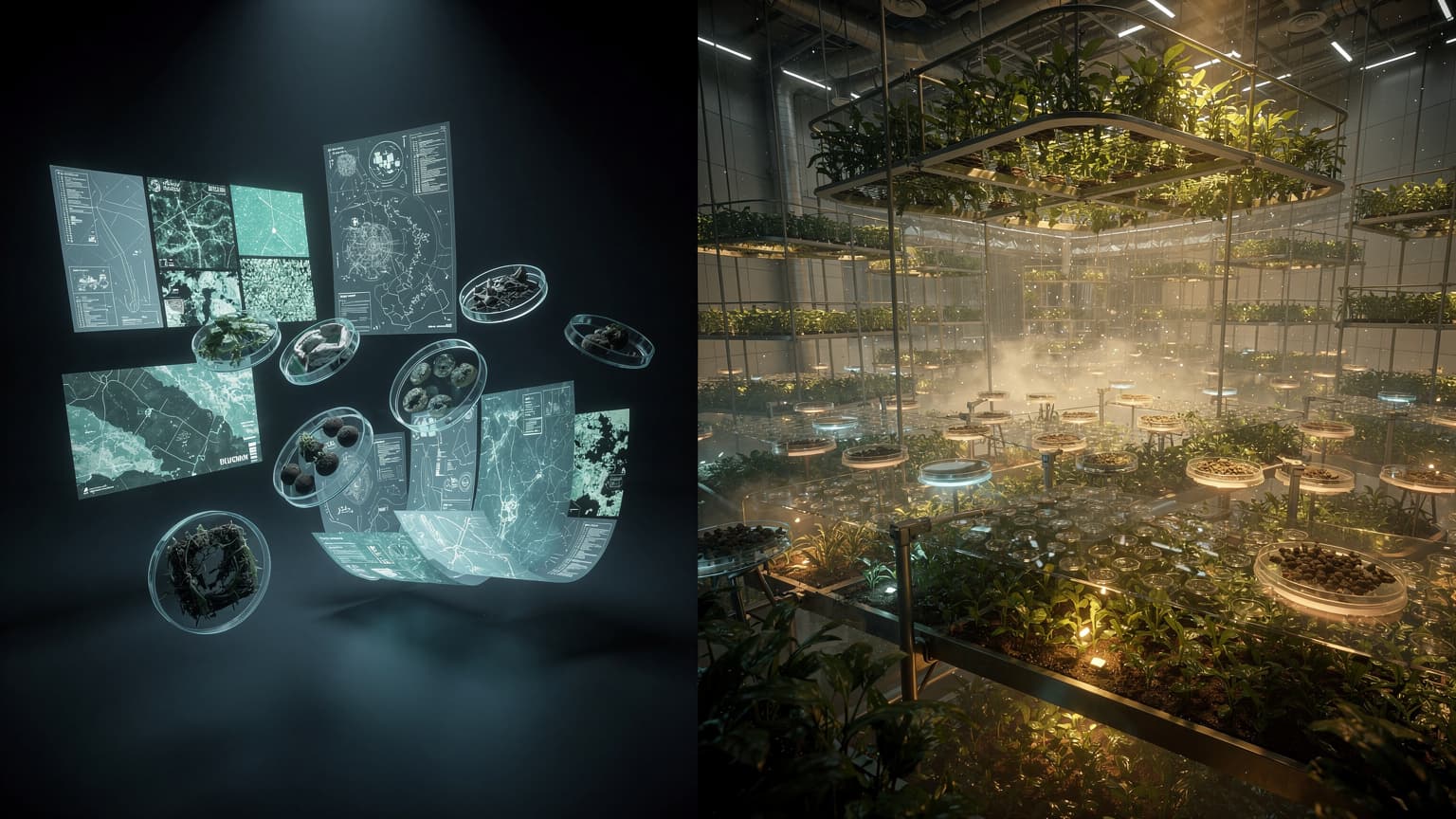
Why an AgriTech extension
Innovation that thrives in a greenhouse can fail in a Vidarbha summer.
NTRAF counters optimism bias with evidence. AgriTech adds three more failure modes the framework must absorb — climate, biology and smallholder economics.
Soil microbiome, crop genotype, pest pressure and farmer practice shift season to season. Readiness has to be re-evidenced across at least two crop cycles before TRL 8 is honest.
A technology that works but costs more than the marginal yield it creates is not deployable. AgriTech readiness adds a price-of-evidence dimension: cost, schedule, performance — and per-acre unit economics.

The constitution adapts itself
A national readiness protocol, written for the soil it stands on.
NTRAF gives reviewers a structured way to classify maturity, document rationale, identify shortfalls, and plan progression. ABIF's AgriTech extension adds agroecological-zone, season, and unit-economics evidence to the same procedure.
The readiness ladder
Nine rungs from observation in a petri dish to deployment on a Bharat-scale supply chain.
Each TRL increases environmental realism, biological honesty, and economic consequence. The middle rungs are where greenhouse becomes agro-climatic zone.
Learn through one irrigation system
An interactive 3D field journey through TRL 1–9
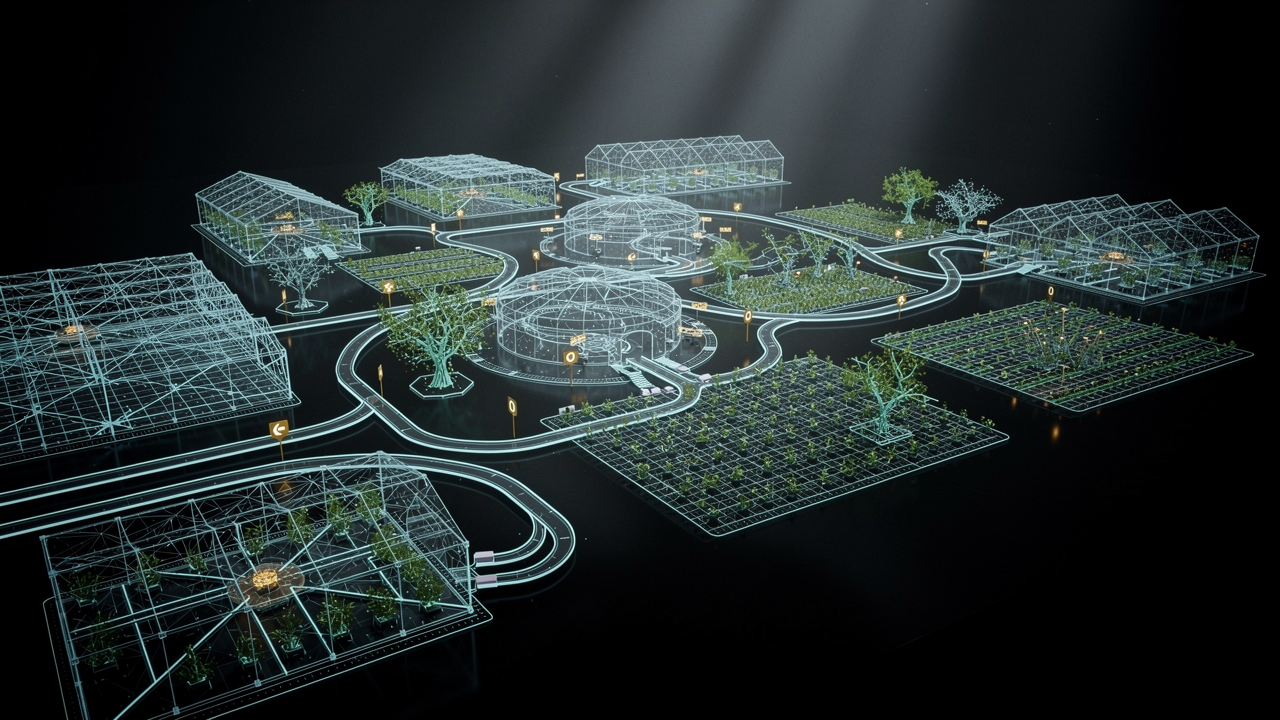
Signature sequencePetri dish to paddy
Entropy decreases as maturity rises: filaments become greenhouses, greenhouses become agroecological-zone pilots, and pilots become farmer-counter-signed deployments.
TRL 1 • BASIC AGRI-SCIENCE
NTRAF section 2Basic principles observed and reported
Lowest level of technology readiness. Scientific principle relevant to a crop, soil, water, livestock, or post-harvest system is observed and reported, with no application designed yet.
INCUBATION VALIDATION CRITERIA
- Core agri-science principle is understood and reproducible in observation.
- A potential application to a crop, livestock, water or soil context is named.
- Early stakeholders — institute, farm, FPO, or partner — are identifiable.
REQUIRED EVIDENCE
Literature review of agronomic / biological principleResearch notes from a controlled observationInitial hypothesis stated in agri-economic terms
TRL 4 to TRL 6
This is where the greenhouse becomes the agro-climatic zone.
The framework treats the middle TRLs as a decisive crossing. Components integrate in the lab, prototypes survive a simulated zone, and pilot evidence comes from a real plot under real seasonal stress.
Greenhouse validationAgro-climatic zone trialPilot-scale farm demonstration
The TRA engine
Assessment is a procedure, not a claim.
NTRAF moves from Level 0 pre-assessment to anticipated TRL, then validates the claim through critical and supporting criteria. In AgriTech, a single missing critical evidence — say, a season of field data — pegs the project to TRL n−1.

Pass
Validation pulseReadiness stabilises
Workflow mapPre-assessment to certification
Run the procedure
Pick a rung, then mark a critical criterion unmet. The engine reports the consequence — not your project's, the framework's.
Criteria met. The rung holds.
Capture the technology, the agroecological zone, the crop or commodity, and the intended adopter. Produce a Level 0 readiness snapshot before any TRL is claimed.
Place the claim against the AgriTech-extended ladder. The reviewer commits to an anticipated rung before evidence is opened.
Each rung's critical criteria are answered yes/no. Any 'no' pegs the project to TRL n−1 and triggers a gap plan.
Pass → the TRL locks. Fail → the report records shortfalls, risk to cost / schedule / per-acre economics, and the next-step plan.
Evidence room
Readiness in agriculture is multi-season, multi-zone, and farmer-counter-signed.
Every level needs traceable artefacts. Missing critical evidence creates a gap plan or a lower certified TRL.

DECODER MODULE // EV-1• REEL RUNNING
RECORD:NARP Field Records
STATUS:CALIBRATED // ACTIVE
LOCATION:LAT 22.314° N // LON 87.302° E
METRICS:soil_moisture: 42.4% // nitrogen: 1.8% // crop: Paddy
SECURE_HASH:HASH: 9b2d881fa2c3e1ea

Bench, greenhouse, agro-climatic-zone, and farm records tied to a claimed TRL — dated to the cropping season they belong to.
Yield delta, input efficiency, detection rate, water saving, post-harvest loss reduction, animal-welfare metrics — and the cost per acre or per animal that produced them.
Component, subsystem, and cross-technology evidence — sensor → controller → actuator → outcome — plus FPO / mandi / cold-chain handover proof for TRL ≥ 7.
Biosafety, soil and water residue records, regulatory clearances, downgrade logic, and the planned progression to the next rung.
Governance layer
Assessment without governance is theatre.
The TRA report turns evidence into an accountable review record — assessed TRL, rationale, shortfalls, risk to cost / schedule / per-acre performance, and a planned progression to the next rung.
STAGE GATE AUDIT STATUS
GATE 1 // COMPLIANT
Assessed TRL and rationale
MEMBER STATUS: VERIFIED
All basic agronomic and biological assumptions counter-signed by ABIF technical review team.
01Assessed TRL and rationale
02Planned TRL progression across the next crop cycle
03Areas where the TRL falls short — agroecological, biological, economic
04Risk to cost, schedule, and per-acre performance
Sub-sector worlds
One framework. Six AgriTech evidence shapes.
NTRAF currently formalises annexures for Healthcare/Pharma (A) and Software (B). AgriTech remains a sector extension — ABIF's role is to anchor that extension across six operational shapes.
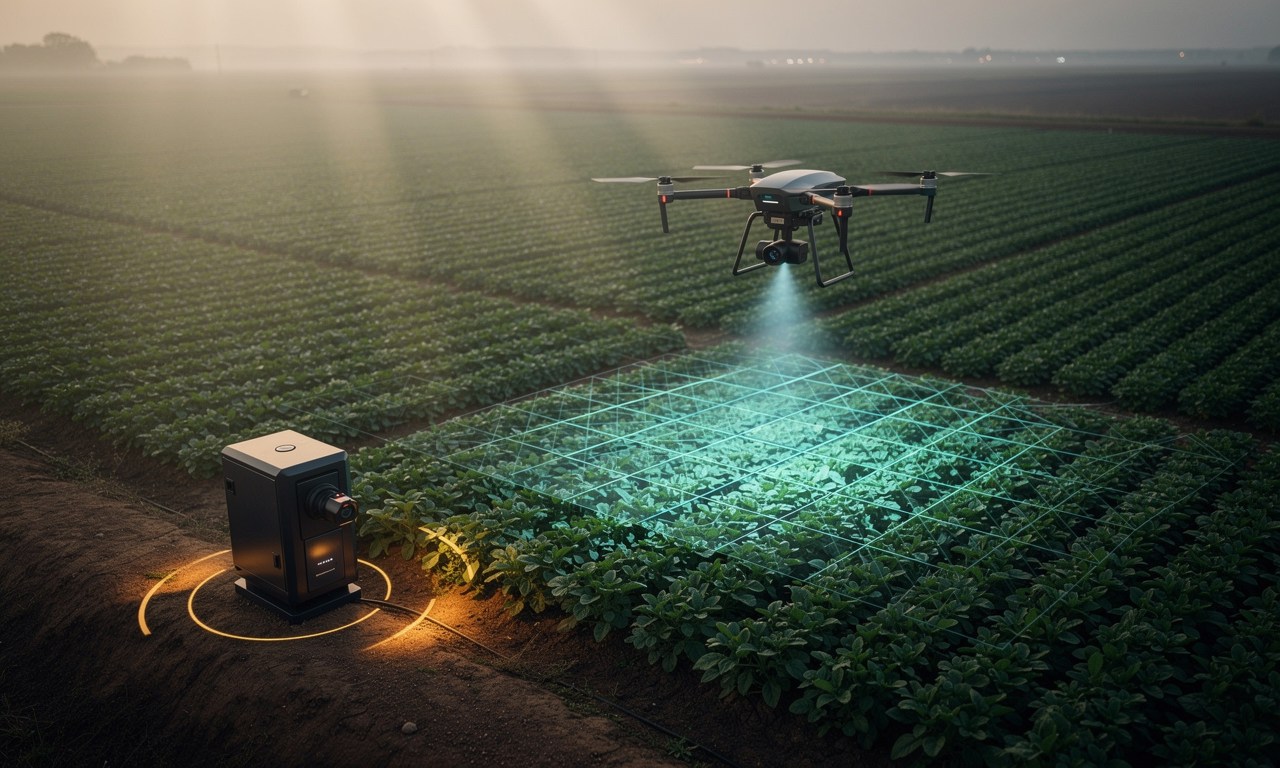
Precision farming
Field tech
Sensors, drones, satellites, decision support.
Precision-farming readiness adds calibration drift, agronomic-rule audit, and per-acre decision-quality evidence to the standard ladder. Critical criteria at TRL 6+ require a complete crop cycle on a partner farm.

Bharat AgriReadiness Mesh
15 agro-climatic zones. One readiness vocabulary.
When labs, startups, FPOs, processors, mandis and deployment partners use the same maturity protocol, AgriTech readiness becomes comparable across the Indo-Gangetic plain, the Western Ghats, the Eastern Himalayan zone, the trans-Gangetic plains, and every zone in between.
4 / 15zones activetap a zone to explore
Agro-climatic zone
Middle Gangetic Plains
Eastern Uttar Pradesh, BiharPrincipal systems
Rice, wheat, maize, pulses, makhana, dairy
Most-active sub-sectors
Precision farmingFPO linkageAnimal & dairy
Readiness Profile
Smallholder economics dominate; per-acre cost decides adoption.
ABIF IIT Kharagpur · the operator
The framework is national. The bridge is local.
ABIF is the institution that walks a startup across TRL 1 → 9 — across labs, fields, FPOs and markets.
ABIF IIT Kharagpur incubates agritech and rural-innovation startups with lab access, mentor matching, FPO field validation and grant-readiness coaching.
Apply for incubationUp to ₹40 lakh matching grant and 6-month acceleration for product-ready agritech and rural-tech ventures.
Open SAMRIDHCo-design field pilots with our FPO partners across multiple agro-climatic zones — TRL 6–7 evidence that holds up in the TRA report.
View FPO partners
Final chamber